
Small bubbles. Different acoustics.
Pulcea’s high-performance bubble curtain changes the medium through which underwater sound travels and therefore changes how that sound is transmitted.
By creating and maintaining very small oxygen bubbles within a controlled fluid, Pulcea creates a mixed-phase acoustic medium around the source of underwater noise. Pulcea’s innovation applies established science in a novel way.
How the high-performance bubble curtain works
Pulcea’s near-field approach is designed to reduce the transmission of piling noise before it travels into the wider marine environment.
See the offshore applicationSound from impact piling travels rapidly over considerable distances in seawater.
Pulcea’s high-performance bubble curtain closely surrounds the monopile during installation. The barrier fluid is held within a flexible containment sleeve made from appropriately sourced materials, creating a controlled acoustic barrier between the pile and the wider marine environment.
As the sleeve is lowered into position, it fills with surrounding seawater, greatly minimising the weight that needs to be deployed from the gripper.
Within the contained seawater, a low concentration of hydrogen peroxide is broken down to produce water and oxygen: 2H₂O₂ → 2H₂O + O₂. Every litre of 50% H2O2 contains 200 litres of oxygen. This creates a very dense solution of small oxygen bubbles diluted by the surrounding seawater.
These oxygen bubbles significantly change the acoustic properties of the fluid, altering the way that sound energy is transmitted through it.
Unlike conventional bubble curtains, which are typically deployed as far-field noise abatement systems, Pulcea is designed as a near-field system, creating a controlled acoustic barrier close to the pile and the source of the noise. These two types of bubble curtains can be deployed as complementary systems.
The Science
The effectiveness of the high-performance bubble curtain comes from the interaction between chemistry, physics and bubble acoustics.
The chemistry generates oxygen within the fluid. The size and behaviour of those bubbles influence the physical properties of the mixed-phase fluid, which affects the transmission of sound.
Pulcea draws on knowledge gained from the controlled use of low concentrations of hydrogen peroxide in the salmon aquaculture sector, where it has been used to support fish health and welfare. This provided an established understanding of its behaviour in seawater, which Pulcea has applied in a different context to generate the oxygen bubbles required for acoustic attenuation.
Bubble size is important. Very small bubbles attenuate higher-frequency sound, while larger bubbles attenuate lower frequencies.
By controlling bubble characteristics, Pulcea can fine-tune the fluid to address different frequency ranges of concern for marine species, including marine mammals and fish.
The effect of gas within a liquid on sound transmission has been understood for decades. Pulcea is applying that established science to a new offshore engineering challenge.

A.B. Wood, A Textbook of Sound, 1941.
The underlying acoustic principle is not new. Its application is.
Things that are true but not obvious
Oxygen bubbles can be remarkably stable
Very small oxygen bubbles remain stable for much longer than might be expected in seawater.
During Pulcea’s experimental work, good acoustic performance was still measured after the experimental set-up had been left undisturbed over a weekend.
Very small bubbles don’t simply float away
At very small sizes, oxygen bubbles behave differently from the larger bubbles we normally associate with water.
Their movement is dominated by Brownian motion in the surrounding seawater rather than buoyancy. As bubbles grow towards millimetre scale, buoyancy becomes increasingly significant.
This unusual behaviour is an important characteristic of the very small oxygen bubbles within Pulcea’s high-performance bubble curtain.
Gas changes the acoustic medium
A mixed-phase fluid containing a significant volume of gas does not transmit sound in the same way as unaltered seawater.
By controlling the oxygen content and bubble characteristics within the fluid, Pulcea changes the acoustic environment through which piling noise must travel.
Small bubbles. Significant acoustic effect.
From principle to measured performance
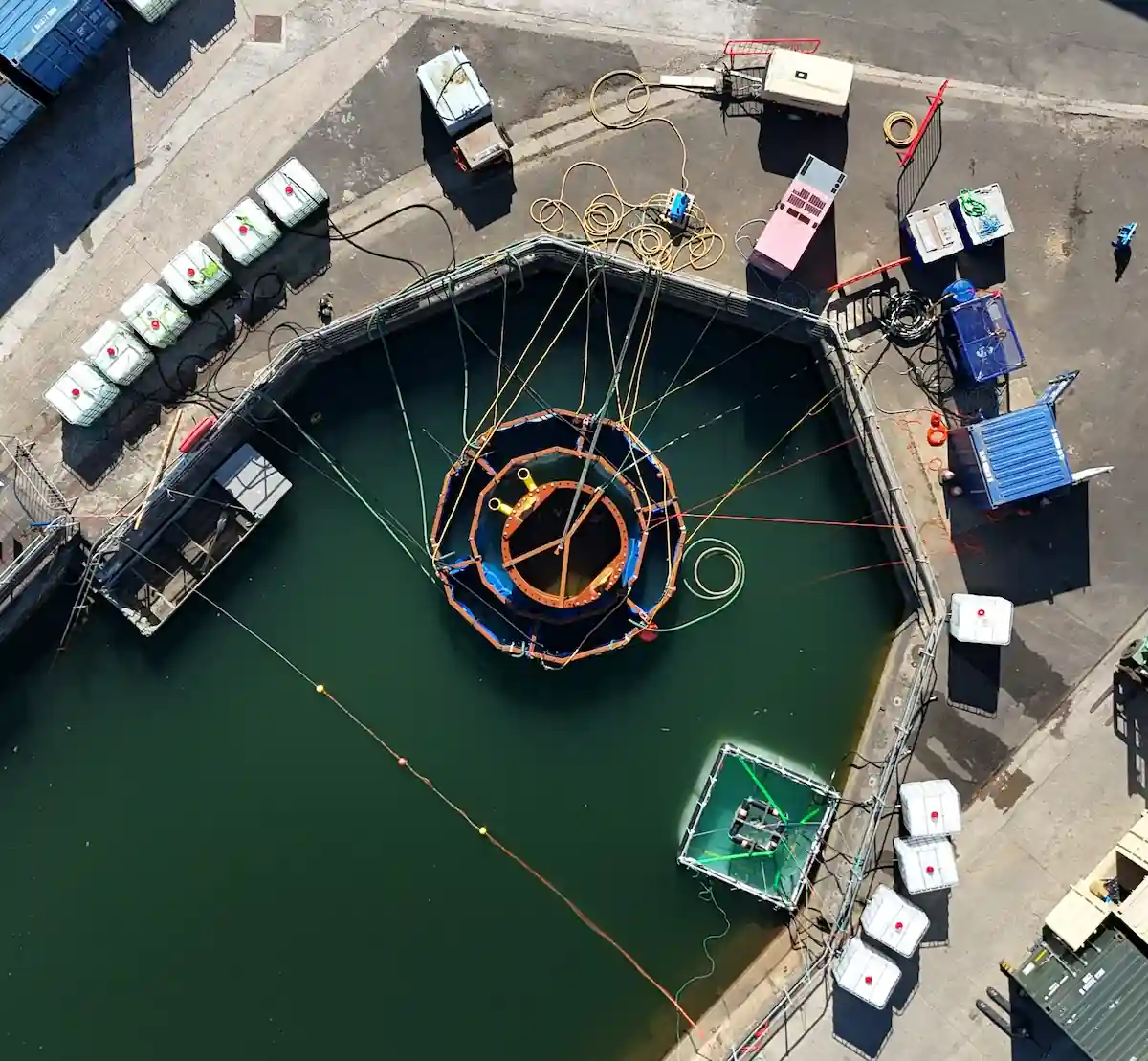
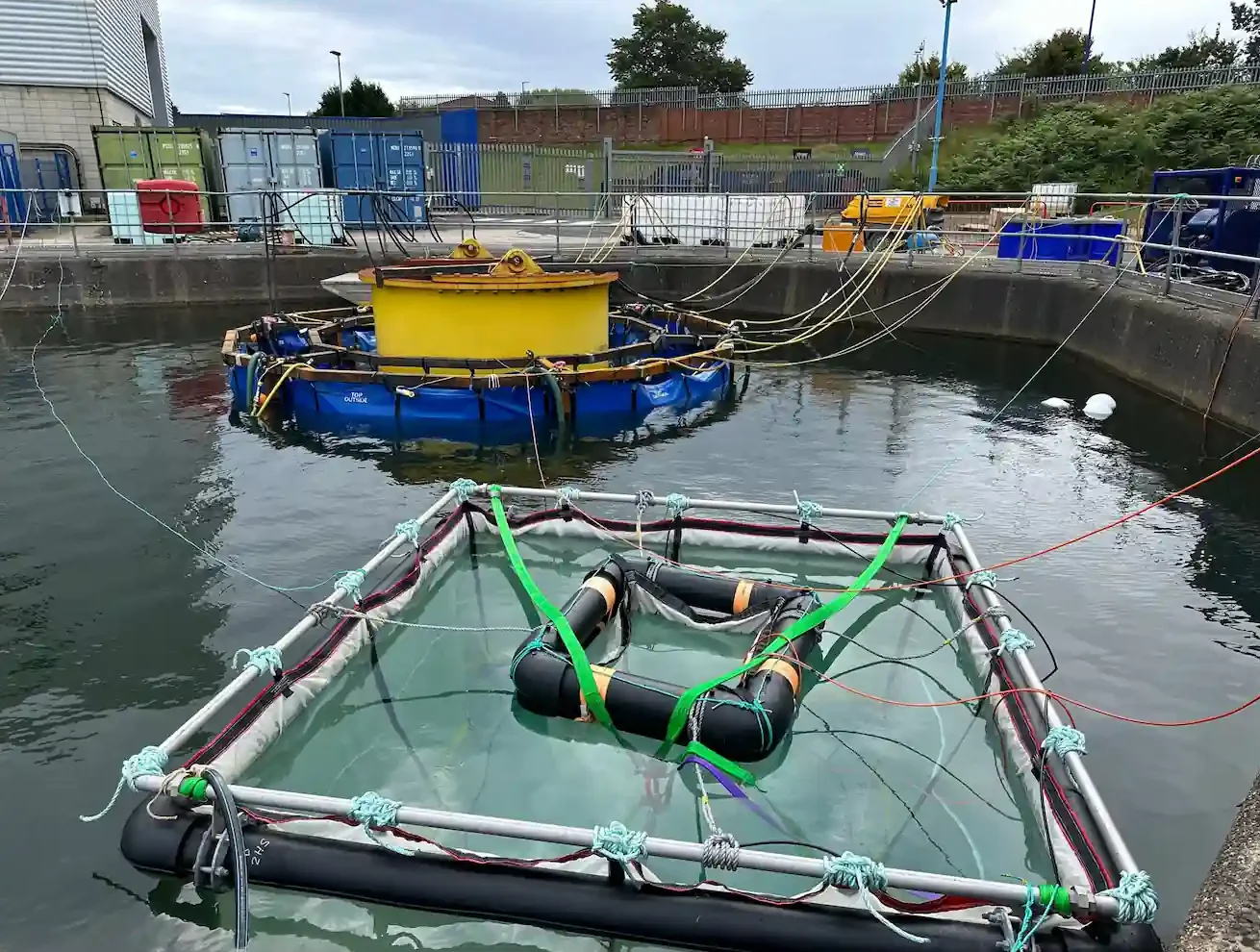
Pulcea has progressed its high performance bubble curtain from scientific principle through experimental testing, modelling and acoustic analysis.
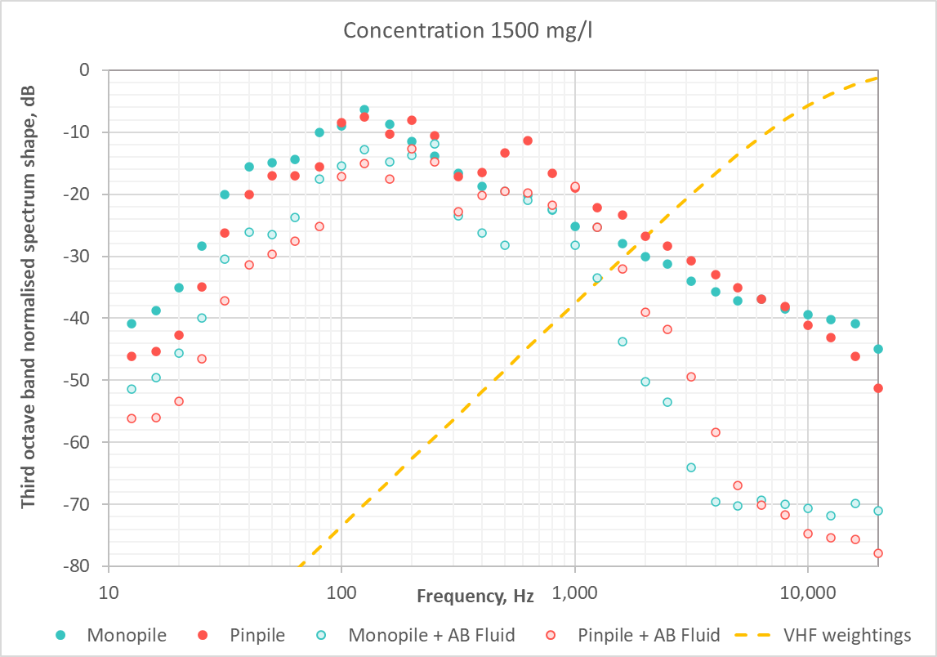
With support from grant funders, Pulcea has gained independently verified evidence relevant to the offshore wind industry, demonstrating good acoustic performance across a wide frequency range and with particularly strong performance at the very high-frequencies relevant to cetaceans such as harbour porpoise.
Measured insertion loss from controlled testing has been applied to representative piling spectrum shapes to model reductions in sound exposure level.
The test in a seawater dock environment work was independently verified by Seiche, specialists in underwater acoustics and marine environmental monitoring.
Evidence across the frequency range
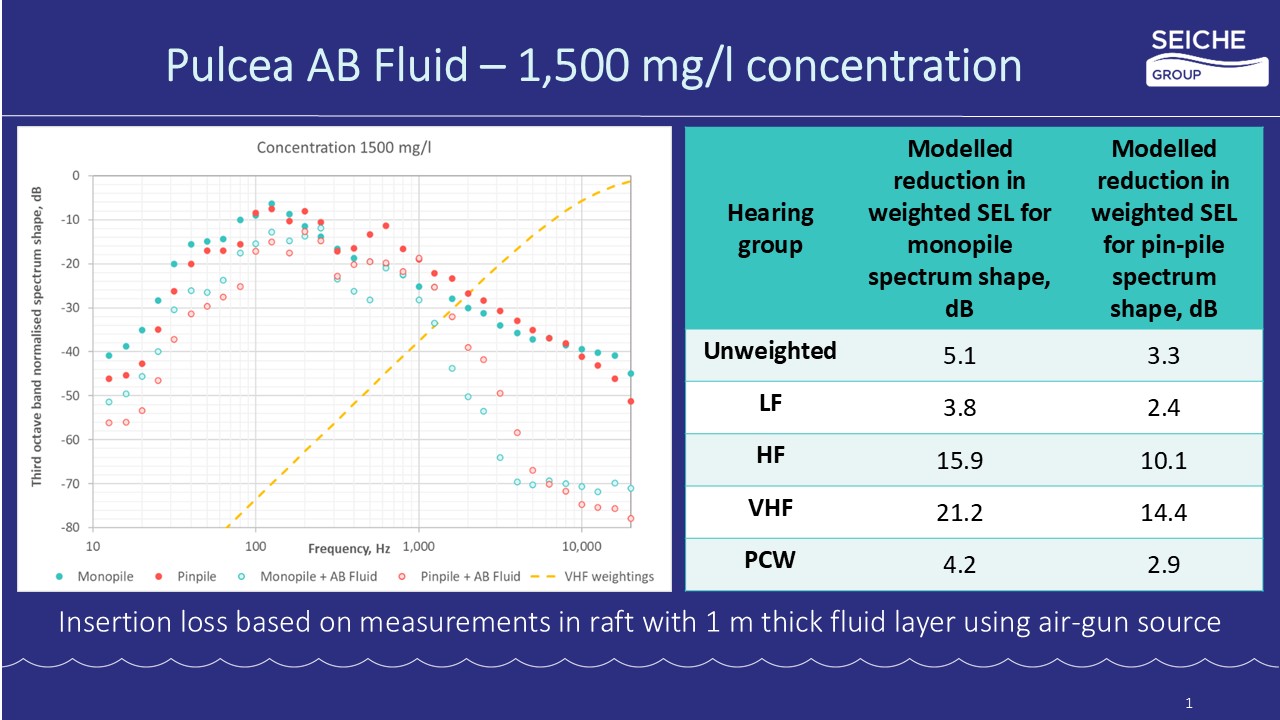
Up to 21.2 dB modelled reduction in weighted sound exposure level for very high-frequency cetaceans, based on measured insertion loss from controlled testing and modelling.
Results also demonstrated attenuation across other marine mammal hearing groups, with performance varying according to hearing group and piling spectrum.
The evidence demonstrates acoustic performance across a broad frequency range, with particularly strong performance at very high frequencies.
Why frequency matters
Marine species do not experience underwater sound in the same way.
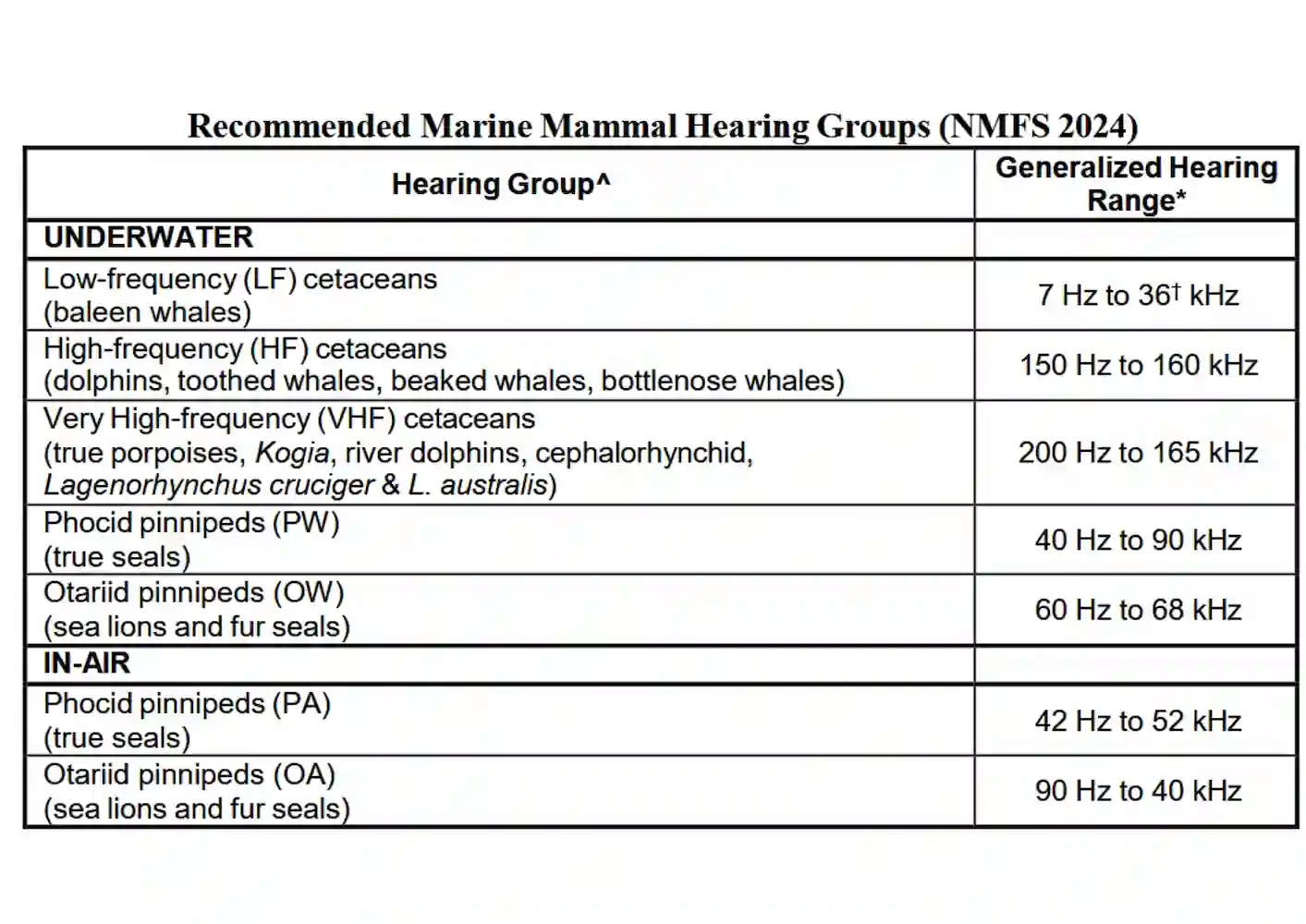
Different species of marine mammals have different hearing ranges and sensitivities. Very high-frequency cetaceans, including the ubiquitous harbour porpoise, are particularly sensitive to higher-frequency sound.
Pulcea’s performance is therefore assessed not simply as an overall reduction in sound, but using hearing-weighted measures relevant to different marine mammal groups.
This provides a more meaningful picture of how Pulcea’s high performance bubble curtain could contribute to reducing underwater noise at frequencies relevant to marine species of concern, and reduce the potentially harmful acoustic impact of offshore piling on marine life.
What comes next
Controlled testing has provided compelling evidence of the acoustic potential of the technology. The next step is to demonstrate that performance at a scale and in conditions relevant to offshore wind.
The next stage will focus on open-water technology demonstration at an appropriate scale, supported by further modelling and acoustic analysis.
This will build evidence around acoustic performance, scale-up, deployment methodology and system performance in representative offshore conditions.
Development will continue alongside consultation and collaboration with the offshore wind sector, acoustic specialists and other stakeholders, helping ensure the technology responds to the practical requirements of offshore deployment and appropriate protection of the marine environment.
The objective is to translate demonstrated acoustic behaviour into a validated, scalable high performance bubble curtain for offshore wind piling.